My Network card broke down!

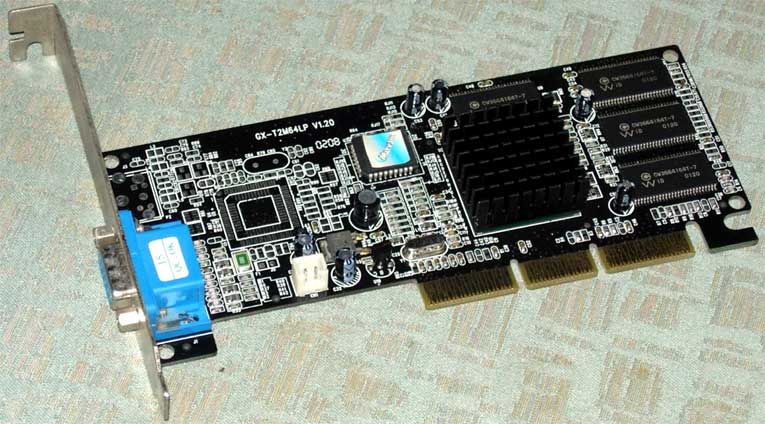
My RTL-8139 based NIC card broke down today ! It broke down, just after one day I finished screenshoting my Fedora Core 4 Desktop for Internet Connection Sharing Guide.

The interesting part is, the RTL-8139 managed to bring down my Fedora Core 4 while spiralling down to it’s demise. I get a screenful of unexplained error message during the boot-up process, not knowing what when wrong at first time.

RTL-8139

Luckily i know a trick or two, i boot up my trusty home-brew KrazhBoX just to found out that an error has occured while the Linux kernel was initializing a PCI card. Which later turns out to be RTL-8139 Ethernet Card. I found this out by doing “cat /proc/pci” in my KrazhBoX.

So to counter the problem, I had to replace my Network card with a new one and reconfigure the Fedora Core 4 distro.

Reminds me to speed up my update on my home-brew KrazhBoX rescue Linux project to use 2.6.12 kernel.

RTL-8139 is the common chip used in PCI LAN card in Malaysia. If you bought a generic PCI Ethernet card, it’s most probably ship with RTL-8139 chip.

Mypapit Blog Alternative URL

Dear blog readers,

For ease of surfing, you can reach this blog by using either of these URL

  1. http://blog.mypapit.net/
  2. http://ppsplit.sf.net/mypapit/

I’ve taken steps not to cloak the url to make it search engine friendly.
Hope that my blog url are easily remembered for all of you outside there!

Tips: Use RSS feeds when you can, it can save you a lot of time! Mozilla Firefox have Live Bookmark feature that enable you to check my blog’s headline quickly.

Series 60 Nokia will have enhanced Java support

According to the news I read from http://geekzone.co.nz, Nokia have made an annoucement that it’s Java-enabled Series 60 phone will include CDC (Connected Device Configuration) for the Java platform. This is a significant leap for the phone industry, because all of mobile available to the market today only supported CLDC.

According to the website, the introduction of enhanced configuration (CDC) in smartphones will drive opportunities for significant improvements in remote management of mobile devices and creating new business opportunities for Java platform software developers in the mobile middleware market.

New developer tools corresponding to the next generation Java platform for Series 60 will be made available in 2nd half 2005 by Nokia’s global developer support program, Forum Nokia.

w000h000, new SDK and smartphone for me to hack

p/s : Actually, i’ve been waiting for quite some time to get my hand into one of CDC enable-device. This is the time i’m waitin’ for…

Finally we bought a friendly scanner

mypapit Canon LiDE 20 Scanner

Since there are so many people at my house need to use scanner for day-to-day stuff (actually only my sister). So we decided to get a Home/SoHo scanner, and naturally i’m the one who got to choose.

Browsing through few stores and places in Alor Star, finally i came across this entry-level SoHo Canon LiDE-20 model. It priced about RM220 at one computer shop at one shopping complex, but i decided to pass it down and bought the similar model in another place which doesn’t require high-maintenance bills, and it only cost my father RM195.

For starters, the scanner’s operation is straight forward. Once you installed the required software drivers in Windows XP the scanner is hot to be use (ok, nothing special about that, it’s normal with M$ Windows). But for a small price to pay, this scanner really roxx! It’s quick, responsive and have intelligent cropping feature that automatically separate items that i scanned together (to save time of course).

The scanner is slick and slim, and it features 3 button “Scan”, “Copy” and “Email”, and those buttons are configureable in it’s accompanying software driver which I promptly modified the “Email” button to do OCR.

After having fun setting up the scanner for my sister, only then i remembered, “Oh my god, how about Linux? I haven’t check the compatibility list before buying this out!”.

Fortunately, most (and i do mean most) of the USB devices now in Linux are just plug-and-play. It’s kinda hard to find USB devices without drivers in Linux nowadays. The Canon LiDE 20 is supported in Linux as I boot them! Well, at least on FC4 and Mandriva 10.2.

The scanner driver from The Sane Project works nicely, and theres no difference at all whether you scan your documents from M$ Windows or GNU/Linux.

For those who are interested in getting new hardware for your Linux pc I think the link below would be some help. Remember choose only hardware which have Linux driver with it, talk with your pocket :

1. Scanner Database
2. Digital Camera-PTP Mode, Mass Storage is always supported.
3. Webcam
4. WiFi
5. Bluetooth
6. Sound Cards
7. Network card
8. Most of Nvidia and ATI Graphic Cards (for 3D Gaming)
9. Almost all USB Mass Storage Device (Pendrive, HDD)

If you are lazy enough to check one, by one, then i suggest you to drop by Mandriva Hardware Compatibility Database. Check whether your hardware is supported by Linux. cheers…

Note : Some of the item of this list (notably no 4,7,8,9) are outdated, please be advised. Other item are maintained by their respective driver project.


Recommended Product
The CanoScan LiDE 20 USB flatbed scanner is one of the world’s most compact flatbeds, yet it offers big performance and big savings. Just over an inch high, it packs all the features you need to scan images, copy documents, and e-mail your favorite photos, all with one-touch operation.

Linux kernel patch, Nano devfs hacks

Linux Logo

Greg KH have released “nano” devfs patch for the current linux kernel to mitigate the concerns of embedded system developers.

However according to Greg the inventor of udev (userspace /dev filesystem), he is not going to submit ndevfs patch to the main kernel tree. He explains it in his words :

“I’m not going to be submitting this. But what it is, is a nice proof-of-concept for people who ‘just can’t live without a in-kernel devfs’ to show that it can be done in less than 300 lines of code, and only 6 hooks (2 functions in 3 different places) in the main kernel tree. That is managable outside of the main kernel for years, with almost little to no effort.”

read more about this topic at :
1. ndevfs – a “nano” devfs
2. ndevfs announcement

MacOSX Intel machine can run Windows XP

MacOSX Intel machine can run Windows XP, well, at least on Apple MacOSX intel machine Developer’s kit.

The Apple Development Platform ADP2,1, as the systems are officially designated, features 3.6GHz Pentium 4 processors with 2MB of L2 cache operating on an 800MHz bus with 1GB of RAM. Apple has been offering the Intel-based machines as part of a special $999 developer kit

Apple System Profiler includes a new line under Hardware listing CPU Features; for the 3.6GHz Pentium 4 this comprises a rather lengthy list of technical acronyms: FPU, VME, DE, PSE, TSC, MSR, PAE, MCE, CX8, APIC, SEP, MTRR, PGE, MCA, CMOV, PAT, PSE36, CLFSH, DS, SCPI, MMX, FXSR, SSE, SEE2, SS, HTT, TM, SSE3, MON, DSCPL, EST, TM2, CX16, and TPR.
MacOSX Intel Motherboard

The motherboard on the system is unmarked except for the word Barracuda. The system’s internals are housed inside a case similar to Apple’s Power Mac G5 systems but with a different configuration of fans.
MacOSX Intel Motherboard PCI

Sources have indicated that Apple will employ an EDID chip on the motherboard of Intel-based Macs that Mac OS X will look for and must handshake with first in order to boot. Such an approach, similar to hardware dongles, could theoretically be defeated, although it’s unknown what level of sophistication Apple will employ.