Backup your Gmail account in Ubuntu Linux with gmvault

This is a follow-up of my previous post “What to do when your Google disabled your Gmail account?“.

Here’s how to download all emails from your GMail account with Gmvault:

Download and setting up gmvault

1. First you need to install python-pip
[bash]
sudo apt-get install python-pip
[/bash]

2. Then using ‘pip’, install gmvault
[bash]
sudo pip install gmvault
[/bash]

3. Finally you can sync and backup GMail accounts with ‘gmvault‘
[bash]
gmvault sync your_username @ gmail.com
[/bash]

4. gmvault will ask you to authenticate yourselves with GMail, and after that, the syncronization process starts. gmvault stores all the gmail backup in the ‘gmvault-db‘ directory.

p/s: Some users encounters error telling that the “All Mail folder is not visible”. You can enable All Mail folder visibility by checking the “Show in IMAP” box in Settings->Labels. Also, IMAP access should also be enabled for this to work.

p/s 2: It might not be obvious right now why you need to backup your emails when Gmail has gigabytes of storage. But according to Gmail discussions group, Google can and might disable access to all of its services, locking the users out from their emails forever.

How to mount exFAT (used in SDcard / USB Drive) filesystem in Ubuntu

exFAT is a filesystem developed by Microsoft for use in flash drives or portable storage devices where the use of NTFS is not feasible. exFAT is inteded to be supported on consumer devices such as MP3 players, cameras, mobile phones and video recorders.

However filesystem formatted with exFAT are not currently supported by Ubuntu (as of 12.04) out from the box. In order to do that, you need to download exFAT filesystem module from relan PPA.

1. Add exFAT PPA repository

[bash]
sudo -s
apt-add-repository ppa:relan/exfat
[/bash]

2. Update apt-get repository
[bash]
apt-get update
[/bash]

3. Install exfat modules
[bash]
apt-get install fuse-exfat
[/bash]

That’s it you’re done! Then you can finally mounts exFAT filesystem using the following command….

4. mounting exFAT filesystem
[bash][/bash]
mount -t exfat /dev/sdd /media
[bash][/bash]

You should be able to mount exFAT filesystem from now on… the fuse-exfat also comes with ‘exfat-utils‘ package which enables the creation, checking and labelling exFAT filesystem.

iotop: How to monitor processes that hogs hard disk writes

iotop is a small and handy tool to monitor processes that hogs I/O resources. iotop outputs is similar to ‘top’ except it lists the hard disk read/write activity as well as swap writes.

You can use the left and write key to sort the heading according to your preference and the R key can be used to reverse the sort. The ‘O’ key is used when you only wants it to display processes that are currently utilizing the disk I/O. While the ‘P’ key can be used to display accumulated IO disk read/write for all the processes (which can be sorted with the arrow keys).

BlackBuntu – Ubuntu-flavored Linux Penetration Distro

Blackbuntu is a Ubuntu-based distro used for penetration testing and security auditing. Blackbuntu is designed to be used by students and practitioners who are interested in the field of information security.

Blackbuntu tools are divided into several categories:

  • Information Gathering
  • Network Mapping
  • Vulnerability Identification
  • Penetration
  • Privilege Escalation
  • Radio Network Analysis
  • VoIP Analysis
  • Digital Forensic
  • Reverse Engineering
  • Miscellaneous

Which includes these tools among others: Lanmap2, nmbscan, dnsmap, fierce, hostmap, ltrace, tctrace, sqlbrute, sqlmap,sqlninja, mysqloit, sqlcheck, wfuzz,xsser,xssploit,jmeter, nikto2,skipfish,wbox, autopsy,scalpel,mboxgrep,galetta,afstats, wepcrack,giskismet,fakeap,aircrack-ng,cowpatty,bluebugger,bluescan, bluesnarfer, iwar,protos-sip,sipcrack,brutessh,hydra,sshater

…and many more.

Blackbuntu can be downloaded from its official website – http://www.blackbuntu.com/

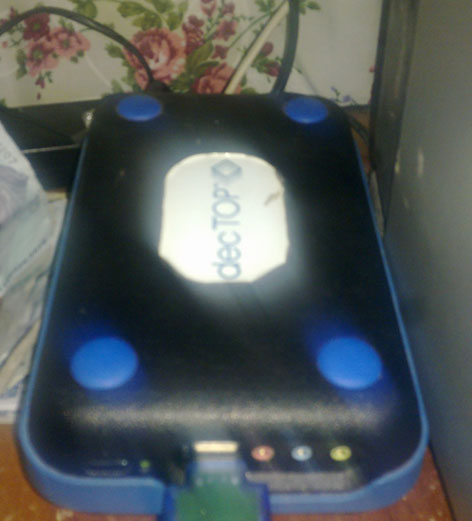
AMD decTOP running Debian Squeeze

After upgrading my AMD decTOP with 160GB hdd, I’ve decided to install a fresh new operating system on it for some side-project that I’m working on. I choose to install Debian GNU/Linux 6.0.3 (Squeeze) on the machine.

The machine is currently running lighttpd web server with PHP5, samba server and sshd (using public-key authentication).

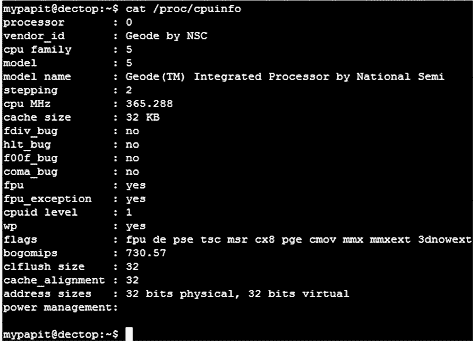
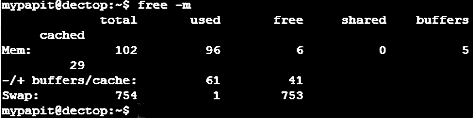
The specs of the machine are outlined in the screenshot.

dectop

You can read more information regarding AMD DecTOP on Wikipedia

Ubuntu: How to create a lot of entropy for GPG key generation from command line

Desktop Ubuntu users may have several ways to generate entropy relatively secure GPG keys (=>2048 bits), usually by moving the mouse and by typing random words. However this creates certain problem, for command-line user (especially those who are connecting through remote VPS connection).

Here’s a tip on how to produce enough entropy for GPG key generation:

  • apt-get install rng-tools
  • rngd -r /dev/urandom
  • then, proceed to generate GPG keys as usual: gpg –gen-key

Hopefully this tips will help you get by generating GPS keys over those VPS connections!