
Gaim Instant Messenger project renamed to Pidgin !

Gaim the popular multiprotocol instant messenger client has changed its name to Pidgin recently. Their main reason for changing the project name because it has been plague by legal threats from AOL concerning the name of the project.

The project has also moved to a new website to pidgin.im with the old gaim website served as a pointer to the new project site.

Apart from that, the project will migrate its current version control to monotone from CVS (hosted by Sourceforge). The newly rebranded Pidgin team hasn’t disclosed the reason behind the migration of revision control system or why they chosen to use monotone instead of the more popular SVN.

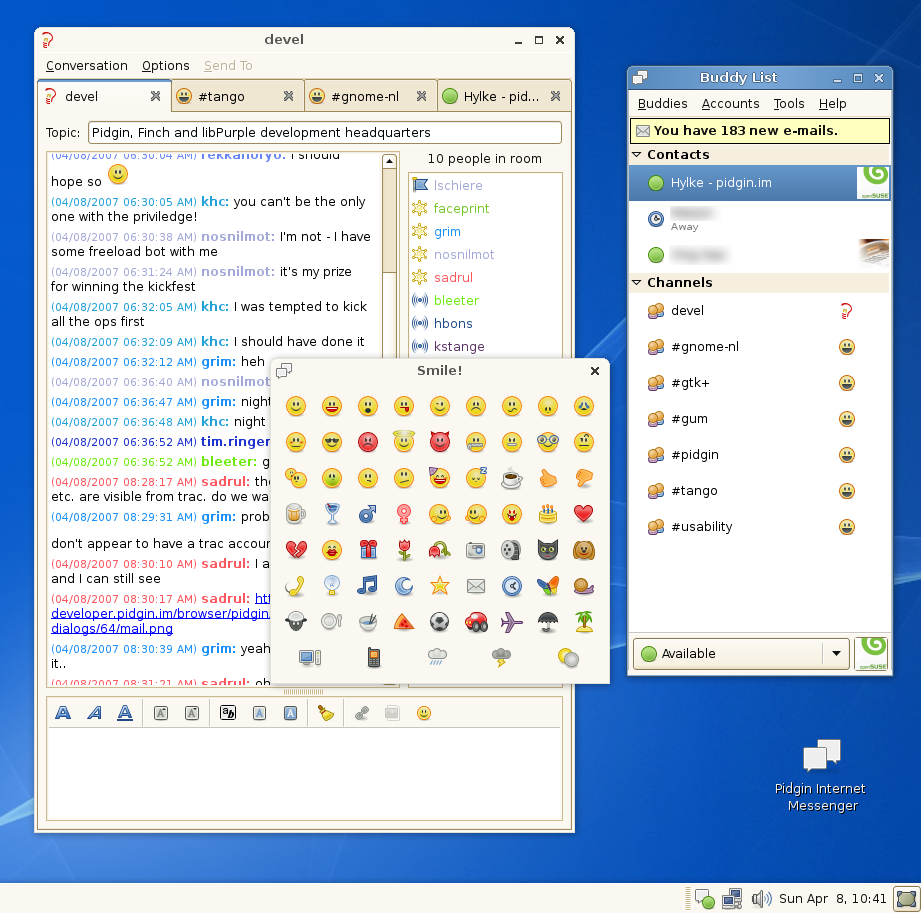
Here’s the latest screenshot of Pidgin IM (formerly known as Gaim) :
pidgin_tn.jpg

About Pidgin (formerly known as gaim)
For those who don’t know, Pidgin/Gaim is a multiprotocol instant messenger which support popular Instant messenger network including Yahoo, MSN Messenger, Jabber, Google talk, AIM, ICQ and IRC.

More information about Gaim rebranding can be found here : Pidgin.im and Gaim Sourceforge website

p/s: Hopefully after this we can have the latest Pidgin 2.0 release as soon as possible since the project won’t be dragged down with the legal issues anymore.

[tags]gaim,pidgin,open source, instant messenger, yahoo messenger,linux ,opensource,ym[/tags]
New features in Ubuntu Linux Feisty Fawn

Here are some of the new features that you can expect from the upcoming Ubuntu release, Feisty Fawn.

Codec Wizard
Now you can play mp3,DVD and mpeg4 videos of yours without much hassle. Ubuntu Linux Feisty Fawn includes a cool Codec Wizard which automatically install the required codec for you when you first played the file.

Improved Network Manager
Connecting to existing network has been made easier with the pre-installed Network Manager. You can now connect to wired and wireless network with relative ease.

Windows Migration Assistant
Provide easy migration from Windows operating system to Ubuntu. Supports Internet Explorer bookmarks, Yahoo IM, AOL IM, Desktop Wallpaper and documents during installation.

Desktop Effects
The latest release includes desktop effects, making it a definite reason to try Feisty Fawn for a desktop user.

Thin Client
An attractive functionality for those that runs a computer lab, thin client server allows you. Edubuntu Feisty Fawn includes Classroom Server edition consists of two CDs, a server image and a server add-on image with additional education applications and languages complete with tips and best practices for educators.

Other than that, Feisty Fawn also includes latest software like GNOME 2.18, OpenOffice.org 2.2.0, X.org 7.2, Firefox 2.0.0.2 and Linux kernel 2.6.20.

Ubuntu Linux Feisty Fawn is schedule to be released in 19 April 2007, please visit the official Ubuntu website for more information.

p/s: Most of this material of this post is taken from Feisty Fawn Beta page

[tags]linux,ubuntu,feisty fawn,feisty,debian[/tags]

ShipIt: Get Free Ubuntu Feisty Fawn CD

The month of April is here and beside fooling your friends on the first of april, let me remind you that Ubuntu Linux (7.04) Feisty Fawn release is just around the corner.

Schedule to be released on April 19, 2007. Free Ubuntu Feisty Fawn CDs is suspected to be back available from ShipIt!

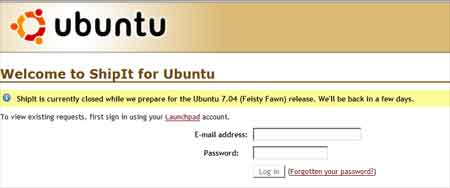
Here’s the screenshot ShipIt interface.

feistyfawn.jpg

What is Shipit?
For those who are unfamiliar with the term, ShipIt is a service maintained by the Ubuntu project for the purpose of shipping free Ubuntu CD through out the world.

To order free CDs, you need to have a launchpad account and the CDs will take around 1-6 weeks to arrive, depending on where you live (and customs delays).

PowerPC CD won’t be available ?
Also it is worth noting that Ubuntu has dropped PowerPC platform from its official release, so the usual PowerPC CD won’t be available from Shipit as with previous releases.

[tags]powerpc,ubuntu,feisty,feisty fawn, debian,linux, opensource,open source[/tags]

April’s Full : Might be the busiest month in 2007

April’s must be my busiest month so far, my desks is piled with a lot of academic journal article to read and some academic writing to do. Thus I can guarantee that this blog will have the sparsest post in 2007.

I’m also working to improve this blog by changing the style of my writing to make it clearer to casual readers. The reason for doing this because I noticed that some of my article is hard to read because I usually write on-the-spot without much planning. So I decided it is best for me to plan my posts first before posting it in order to improve the readability and improve my writings.

WordPress 2.1.3 and 2.0.10
In another separate news, WordPress.org has released yet another security update for the WordPress blogging platform which fixes XML-RPC interface issues and XSS vulnerabilities.

WordPress users are suggested to upgrade their installation to the latest release to avoid from being compromised.

[tags]wordpress, april, personal, announcement[/tags]

Why newbies still use outdated Red Hat Linux 9 ?

I’m writing this because I found out that many Linux newbie still prefer to use Red Hat Linux 9 compared to Fedora Core distribution.

Red Hat Linux 9 has been released in 2003, and between that year and at the time of this writing, Red Hat Linux 9 has been superseded by almost 6 newer releases (Fedora Core 1 – Fedora Core 6, Fedora 7 if you want to count that too)

Red Hat Linux 9 has been long abandoned by Red Hat when it discontinued its support in April 2004 (3 years ago) in favor of Community maintained Fedora Core line (now Fedora) .

To show you that how much technology has changed since its release, Red Hat 9 includes linux kernel 2.4.20, mozilla browser 1.2.1, openoffice 1.0.2 as opposed to the latest distribution which includes linux kernel 2.6.19, (or 2.4.34, if you count the 2.4 branches) mozilla 1.8.x.

One might wonder how many security holes left unfixed when Red Hat stopped providing security patches to the operating system since April 2004 (three years ago).

What makes people (especially by newbies) still use Red Hat Linux 9 ?

  • Red Hat Linux is the most popular Linux distribution during late 1990s and early 2000
  • Red Hat made a terrible rebranding move, it rebrands Red Hat Linux to a completely new name Fedora Core.
  • There are still lots of older “Linux for beginner” books that make reference to Red Hat Linux (7.0,7.1,7.3,8.0), this left an impression to newbies that Red Hat Linux 9 is the latest ‘Linux’ release (old book stock with free RH9 CDs is the main culprit)
  • Newbies trust the content in the books 100% without taking account that computer software books has an ‘unofficial expiry date’, they should have done more research through the internet.

Implication of using Red Hat Linux 9

  • People will get the wrong impression about Linux, based on outdated technology
    Drivers support is not up to date with the current hardware (not much wifi support, unstable drivers)
  • Old software which is buggy and crash prone
  • Outdated Server softwares with tons of security vulnerabilities or even with outdated configuration file.
  • Support websites which do not exists anymore, people will get lost without proper documentation
  • No software updates support.
  • Broken software due to changes in communication protocol (gaim msn, yahoo messenger, up2date, etc)
  • Primitive software (that do not conforms with the latest trend) that may cause data loss

So please ditch the idea of using Red Hat 9 as your first distro and use latest Linux distro release for your own good, things changed a lot since RH9 been released.

norh9.png

Say no to Red Hat 9 :p

[tags]red hat, red hat linux,redhat,linux,debian,yum,ubuntu,kernel,distro[/tags]

Linux / Unix command line sex jokes

I forgot where I found this joke, but I find it funny when people use Unix command to relay jokes.

alias sex "updatedb; locate; talk; date; cd; strip; look; touch; finger; unzip; uptime; gawk; head; apt-get install condom; mount; fsck; gasp; more; yes; yes; yes; more; umount; apt-get remove --purge condom; make clean; sleep"

p/s: this is one thing I like about Unix (or Linux), the users and developers are just having way too much fun hacking the platform!

[tags]unix,linux,make,open source, ubuntu, debian, fsck, apt-get[/tags]