My wishlist: PHP Development in the Cloud

I’m not a PHP developer by profession, nor I’m very good at it, there are times where I was required to write PHP web application for my daytime job. While it is still a simple application, nevertheless I grew fond of the simplicity of PHP application development and deployment (though some aspects of the language still confuses me, and sometimes the maintenance is a PITA).

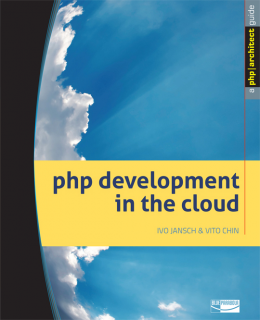
I haven’t developed any PHP application for the masses yet, but if I do, I imagine it would benefit from the use of Cloud, therefore my latest wishlist is this book: PHP Development in the Cloud

php development in the cloud

The book is written by Ivo Jansch and Vito Chin, and it covers Cloud Computing Characteristics and Models, Cloud Computing Architecture and Scalability and how to prevent bottlenecks, Working with Popular Cloud Infrastructures and Platform (covers Amazon, Google and Rackspace) and Working with Popular Cloud Software and Services (OpenID, OAuth, CRM, Maps and Storage).

The book is available from in paperback format from online bookstore (Amazon, Barnes & Nobile, etc) or in digital form from PHP Architect website

Public Domain vs Open Source License, which to choose ?

*Note that I’m not a legal expert or an attorney, this is just based on my personal experience and internet search*

There are people who asked me about why bother to release a piece of software or code under Open Source License instead of putting it in Public Domain.

First of all it is a matter of personal choice if write the code or the said work on your own, . But if you release your work under open license (open source or creative commons), you can still retains the copyright (ownership) of the materials that you’ve released. Technically, people who used your work has to adhere to the copyright license terms of your choosing, including freeing you from liabilities if the software is broken or causes harm. Licensing your work will acknowledge you as the owner and those who used your application, and you retain legal rights for your work.

On the other hand — once you have put your work on Public Domain, you will lose your rights on the work, as the work would have no copyright-owner and isn’t protected by copyright law. So people are free to use the materials without any restrictions at all, including to incorporate the material into their work and make it proprietary and subsequently copyrighted it without legal repercussion. You will lose the legal right on your work.

Public domain isn’t a license, it is merely a statement that the software was given to the public and to make things more complicated, some countries disallow public domain material, meaning that the writer will not be protected by the copyright law if the software causes harm to others (the ABSOLUTELY NO WARRANTY and LIMITED WARRANTY, or AS IS clause).

Remember: Public Domain is not recognized internationally and is not stipulated under Berne Convention and in some countries, the author can’t disclaim moral rights.

Therefore, it is more wise to release the the software under a permissive license (copyright), rather than releasing it under public domain right away.

References
1. Creative Commons vs Public Domain
2. Is Public Domain software Open-Source ?
3. Why the Public Domain isn’t a License?
4. Why public domain release is a bad idea

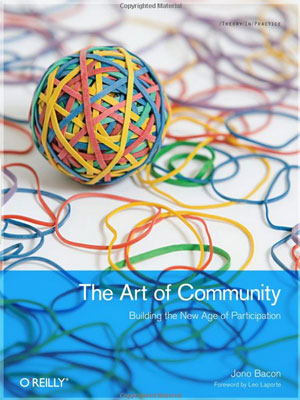
I’m Getting The Art of Community: Building the New Age of Participation Book by Jono Bacon

Art of Community

I’m getting “The Art of Community: Building the New Age of Participation“, a book written by Jono Bacon, Ubuntu Community Manager (UCM).

In this book, Jono offers a collection of experiences and observations from his involvement in building and managing communities, including his current position as Ubuntu Community Manager, arguably the largest community in open source software.

The content of the book, will help you to:

  • Develop a strategy, with specific objectives and goals, for building your community
  • Build simple, non-bureaucratic processes to help your community perform tasks, work together, and share successes
  • Provide tools and infrastructure that let contributors work quickly
  • Create buzz around your community to get more people involved
  • Track the community’s work so it can be optimized and simplified
  • Explore a capable, representative governance strategy for your community
  • Identify and manage conflict, including dealing with divisive personalities

This book is useful to those who are in a position that manages and responsible towards online communities, including day-to-day management, governance, managing conflics and how to promotes the community effectively.

An online preview is this book is available from Amazon Bookstore
“, a book written by Jono Bacon, Ubuntu Community Manager (UCM). website.

Google Friend Connect is back at Mypapit GNU/Linux Blog

Google Friends Connect (GFC) Widget is finally back at Mypapit GNU/Linux blog sidebar! Users now can elect to follow the blog updates publicly or privately on the GFC widget and can even invite friends to join in together.

Why not Facebook fan pages?
While I myself have a Facebook account, I strongly disagree with Facebook move to discontinue the use of certain of their older application API almost abruptly. This gives a bad impression to me that Facebook can suddenly changed their mind about Facebook Platform (the one that powered Facebook Fan Pages) and discontinuing part of the API in the future.

On the other hand, please Follow my blog for the latest updates!