
Public Domain vs Open Source License, which to choose ?

*Note that I’m not a legal expert or an attorney, this is just based on my personal experience and internet search*

There are people who asked me about why bother to release a piece of software or code under Open Source License instead of putting it in Public Domain.

First of all it is a matter of personal choice if write the code or the said work on your own, . But if you release your work under open license (open source or creative commons), you can still retains the copyright (ownership) of the materials that you’ve released. Technically, people who used your work has to adhere to the copyright license terms of your choosing, including freeing you from liabilities if the software is broken or causes harm. Licensing your work will acknowledge you as the owner and those who used your application, and you retain legal rights for your work.

On the other hand — once you have put your work on Public Domain, you will lose your rights on the work, as the work would have no copyright-owner and isn’t protected by copyright law. So people are free to use the materials without any restrictions at all, including to incorporate the material into their work and make it proprietary and subsequently copyrighted it without legal repercussion. You will lose the legal right on your work.

Public domain isn’t a license, it is merely a statement that the software was given to the public and to make things more complicated, some countries disallow public domain material, meaning that the writer will not be protected by the copyright law if the software causes harm to others (the ABSOLUTELY NO WARRANTY and LIMITED WARRANTY, or AS IS clause).

Remember: Public Domain is not recognized internationally and is not stipulated under Berne Convention and in some countries, the author can’t disclaim moral rights.

Therefore, it is more wise to release the the software under a permissive license (copyright), rather than releasing it under public domain right away.

References
1. Creative Commons vs Public Domain
2. Is Public Domain software Open-Source ?
3. Why the Public Domain isn’t a License?
4. Why public domain release is a bad idea
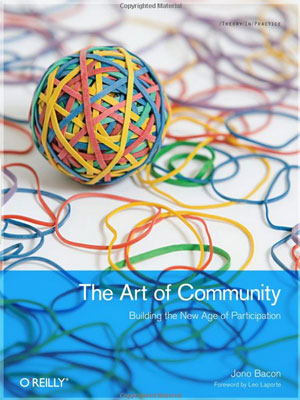
I’m Getting The Art of Community: Building the New Age of Participation Book by Jono Bacon

Art of Community

I’m getting “The Art of Community: Building the New Age of Participation“, a book written by Jono Bacon, Ubuntu Community Manager (UCM).
In this book, Jono offers a collection of experiences and observations from his involvement in building and managing communities, including his current position as Ubuntu Community Manager, arguably the largest community in open source software.

The content of the book, will help you to:

  • Develop a strategy, with specific objectives and goals, for building your community
  • Build simple, non-bureaucratic processes to help your community perform tasks, work together, and share successes
  • Provide tools and infrastructure that let contributors work quickly
  • Create buzz around your community to get more people involved
  • Track the community’s work so it can be optimized and simplified
  • Explore a capable, representative governance strategy for your community
  • Identify and manage conflict, including dealing with divisive personalities

This book is useful to those who are in a position that manages and responsible towards online communities, including day-to-day management, governance, managing conflics and how to promotes the community effectively.

An online preview is this book is available from Amazon Bookstore
“, a book written by Jono Bacon, Ubuntu Community Manager (UCM). website.

Google Code Hosting now supports Git!

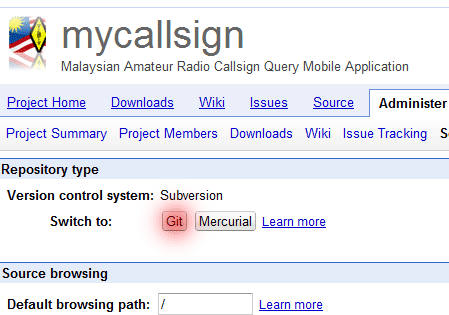
Great news to all developers out there! Google Code hosting service now supports Git in addition to Subversion (SVN) and Mercurial. Probably the top Google Code wishlish, I’m sure open source developers appreciates Google decision to offer Git support on its free open source code hosting service.

New and existing projects may continue to use SVN and Mercurial as version control and those who wished to switch to Git may do so from the “Administer” option in the Google Code Project Dashboard

Some note about Google Code Git support:

  • Requires at least Git 1.6.6
  • Repo size limit 4GiB
  • Push pack limit of 500 MiB (soon to be lifted)
Google Code Git

For more information about Git support in Google Code, please read: Google Code Git FAQ

Scientist: How to attribute free software contributions in journal article, proceeding and monograph

Scientists, academicians and researchers are a group of users that benefits greatly from Free and Open Source Software (FOSS / FLOSS). Most them would use free software not only to help in preparing graph and documentation, but also as the main tool in their investigation.

Although it is not explicitly required by the software license or by software authors, the role of free software should be appropriately attributed by academicians and scientists who used them in their investigations as it would not only acknowledge the contribution of free software authors (some of them are hardworking academicians or scientists themselves), but this will also done to fulfill the academic accountability on the researchers part.

Examples on how to attribute Free Software use in Academic Paper
1. Researchers/Academician may cite the software URL and the software author in the “Literature Review/Background”, “Methods”or “Acknowledgement section” in the articles.

2. The citation should include the software release number and the URL to download the software in order to help other researchers to replicate the work (publishing paper is all about guiding others to replicate the investigation)

3. If free software being used as the main tool in the investigation, it would be helpful if the academician/researcher could explain why this particular Free Software is chosen for the research, etc in their journal article or academic papers.

For more examples: Visit the Debian Free Software Guideline, there’s a section about attributing free software in scientific and academic papers.

Give credit to Free Software! Please share this post
If you are an academician or researcher, then please share this post because it will increase awareness about the need to properly attribute free software tools, software author and their role in scientific community.

Thanks!

Goodbye 2.6.x – A downloadable archive of all Linux 2.6.x kernel releases

Linus Torvalds has announced Linux kernel 3.0-rc1, this marks the end of 2.6.x series line which has 40 releases since late 2003.

To mark this event, Con Kolivas has made a tarball archive (163MB) of all 2.6.x releases available for download. The archive uses lrzip compression which can be installed from the standard Ubuntu apt-get repository.

Note that the size of of the archive after decompression would reach 10.3 GB!

Happy downloading, and hello Linux 3.0!

Buzz!! – Yahoo like IM shake with Pidgin Nudge plugin

I think most of you may have already migrated to Empathy, the default Instant Messenger client for the GNOME desktop environment. But I still use Pidgin IM because I like its functionality and its expandable plugin architecture.

I am a Yahoo Messenger user, and one thing that I miss about when using Pidgin (either on Linux or Windows) is the “shake-effect” whenever I receive “Buzz” or “ding” from my contacts. Back in 2003 (when Pidgin still was called Gaim) I tried replicating that effect, but to no avail. However, just a couple of weeks ago I discovered “pidgin-nudge“, a plugin that shakes conversation window when it receives “Buzz”,”nudge” or “ding” from contacts. Here’s how it looked :

Installing pidgin-nude on Ubuntu linux is easy! First make sure you have Pidgin 2.6.x and above installed. Then you have to install “pidgin-dev” package alongside with “build-essential” to compile the plugin source code, as shown in the example below.


sudo apt-get install subversion pidgin-dev build-essential
svn checkout http://pidgin-nudge.googlecode.com/svn/trunk/ pidgin-nudge-read-only
cd pidgin-nudge-read-only
make
sudo make install

Happy Buzzing!